How to Get Cheap Business Class Flights: 10 Levers That Actually Move the Price
The seat is the same. The price is not. Here is how to decide which passenger you are going to be.
By Biirdee Team · September 6, 2026
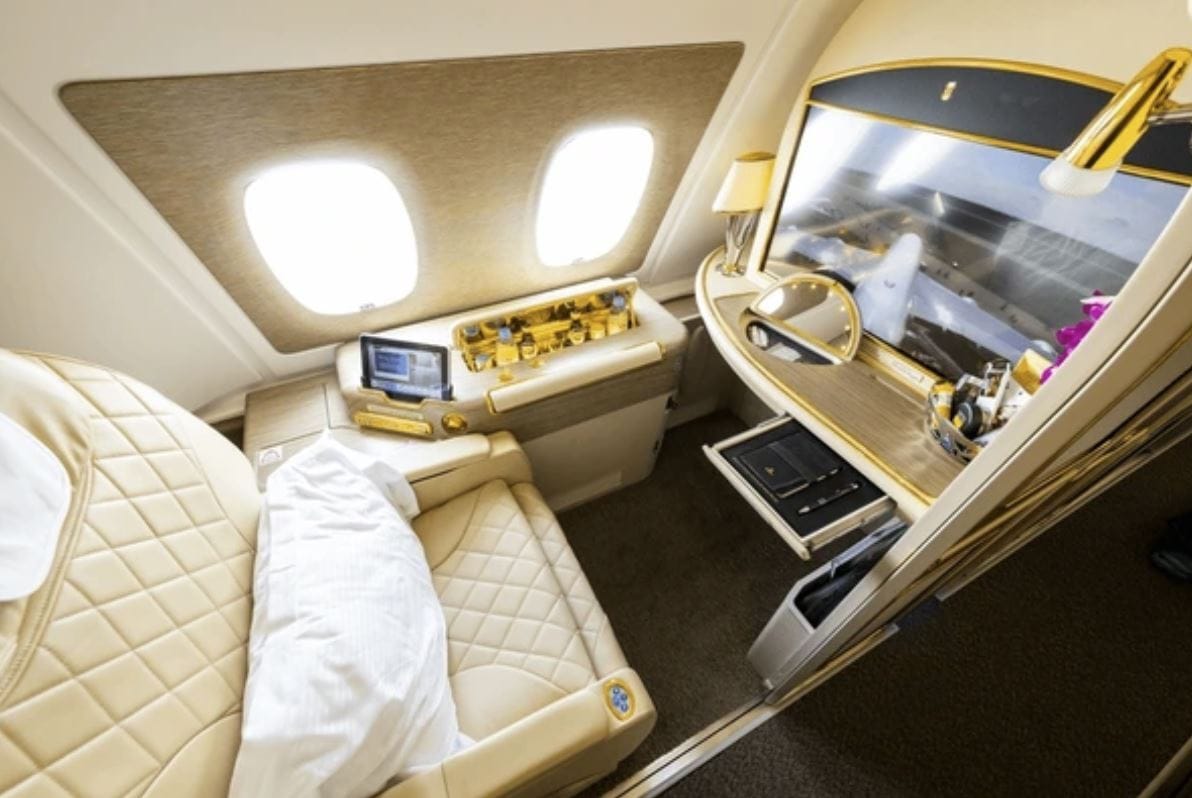
On any long-haul flight tonight, the people in business class paid wildly different amounts for the same bed, the same meal, and the same lounge. One paid the published fare. One paid a sale fare that started in a different city. One paid 60,000 miles and a few dollars in taxes. One bought premium economy and moved up with miles the week before. Cheap business class is not about stumbling onto a secret sale. It is about deciding, deliberately, which of those passengers to be.
This post walks through the levers that actually move the price, roughly in order of how much they save. Program rules and prices below are current as of September 2026 and change often, so treat every number as a benchmark to check rather than a promise. For the deep dive on the agency-only fares that anchor most of our own quotes, see our guide to flying business class for less.
First, What "Cheap" Looks Like
It helps to know the target before you start pulling levers. Some reference points for a one-way business class seat, as of September 2026:
- US to Europe: 57,500 American miles on Finnair, Iberia, or American; 60,000 Flying Blue miles on Air France or KLM; 40,500 Avios on Iberia off-peak; 80,000 to 88,000 United miles on Lufthansa, SWISS, TAP, Turkish, or Austrian. In cash the same seat often runs $2,000 to $4,000 each way, more on peak dates.
- US to Japan: 60,000 American miles on a JAL nonstop; 52,500 to 60,000 Virgin Atlantic points on ANA; 50,000 ANA miles in low season. Cash fares typically sit at $3,000 to $5,000 each way.
- US to Doha and beyond on Qatar's Qsuite: 70,000 miles through American, Qatar Privilege Club, or Atmos Rewards, against cash fares that often start at $3,500 each way.
- Short hops inside Asia on Cathay: 27,000 Asia Miles for a seat that costs a few hundred dollars in cash, which is exactly why miles matter less here.
The gap between the miles price and the cash price is the whole game. A seat that costs $4,000 in cash and 60,000 miles plus $200 in taxes is returning more than six cents per mile. That is the kind of redemption worth planning a trip around.
1. Pay With Miles, and Spend Them on the Seats With the Worst Cash Prices
Miles are the single biggest lever, and long-haul business class is where they work hardest. Airlines price award seats in one of two ways. Some use fixed charts, where a route costs the same number of miles regardless of what the cash fare is doing. Others price dynamically, so the miles track the cash price. The value lives in the fixed-chart seats, because the chart does not know that it is December.
The quick test for any redemption is cents per mile: subtract the award taxes from the cash fare you would actually have paid, then divide by the miles. Say a seat that sells for $3,500 in cash costs 80,000 miles plus $60 in taxes. That is $3,440 of value for 80,000 miles, or about 4.3 cents per mile. Anything above three cents on a long-haul premium seat is a strong use of points. Anything under one cent means the miles are better saved.
Don't have a big balance? Keep reading. Most people are closer to a business class award than they think, because bank points count.
2. Book Through the Right Program, Not the Airline You're Flying
This is the lever most travelers never touch. The airline that flies the plane and the program that sells the award seat are two different things, and alliances mean the same seat is usually for sale through several programs at several prices. A few examples, as of September 2026:
- Lufthansa business class, US to Europe: 80,000 to 88,000 United miles with no fuel surcharges. The same seat booked through Lufthansa's own Miles & More adds roughly €1,150 in surcharges.
- Qatar's Qsuite from the US: About 70,000 miles whether you book through American, Qatar Privilege Club, or Atmos Rewards. Book it with British Airways Avios and you pay a further $235 or so in surcharges for the identical seat.
- Cathay Pacific business class, North America to Asia: About 85,000 Avios through Finnair Plus, but around 108,000 through British Airways.
We wrote a full post on this: how to use another airline's miles program when booking a flight.
3. Turn Bank Points Into Airline Miles at the Right Moment
Flexible bank currencies are how most people fund a business class award without ever flying for the miles. American Express Membership Rewards, Chase Ultimate Rewards, Citi ThankYou, Capital One, Bilt, and Wells Fargo points all transfer to airline programs, usually at one to one and usually instantly. Two things decide whether this works for you:
- Which bank reaches which program. As of September 2026, United takes transfers only from Chase and Bilt. American takes them only from Citi. Delta only from Amex. Atmos Rewards (Alaska and Hawaiian) only from Bilt. ANA only from Amex, and slowly, one to three days. Flying Blue and Virgin Atlantic accept all six, which is a big part of why they keep showing up in cheap business class stories.
- Timing. Banks run transfer bonuses of 20 to 40 percent several times a year. A 30 percent bonus turns 60,000 points into 78,000 miles, which can be the difference between one seat and two. Check for a bonus before every transfer.
The rule that overrides everything: transfers are one-way and irreversible. Find the seat first, confirm it is bookable, then move the points. Never the other way around.
4. Fly Off-Peak, and Learn Each Program's Calendar
Several programs still publish seasons, and the discounts are large.
- Iberia prices off-peak dates roughly 30 percent cheaper. Off-peak is broadly January to March and October to November, and a US East Coast or Chicago to Madrid business seat is 40,500 Avios one-way in those windows.
- Flying Blue posts a new batch of Promo Rewards on the first of every month, typically about 25 percent off selected routes for a travel window of around six months. Business class promos have appeared at 45,000 to 50,000 miles one-way across the Atlantic.
- ANA prices its own flights in low, regular, and high seasons. The Room business class is 50,000 miles one-way in low season and punishing in high season.
- Qatar Privilege Club prices peak and off-peak, and its Saver awards run about half the price of Flexi.
If your dates can move by a week or two, say so to whoever is searching for you. Flexibility is the biggest single lever in award travel.
5. Search When Seats Are Released, Not When You Happen to Be Ready
Award seats are released in waves, not evenly. Most programs open their calendars about 330 to 360 days before departure, and that first wave is often the best. Cathay loads long-haul business class roughly 350 days out and then releases a second wave inside about two weeks of departure. Etihad's premium cabins show up for booking through American only about 30 days out. Upgrade space tends to release close to departure as well.
Two practical consequences. If you are searching eleven months ahead and see nothing, the airline may simply not have loaded the schedule yet, which is not the same as sold out. If you are searching two weeks ahead and see nothing, wait a few days and look again, or set an alert. A saved search that watches a route and pings you when a seat appears is the thing that keeps looking after you stop.
Party size matters too. Space for four seats together is a different world from space for one. Families should start earlier and stay more flexible.
6. Buy a Cheaper Cabin and Upgrade With Miles
The upgrade play is underrated. You buy a cash ticket in a lower cabin and spend miles, sometimes miles plus a cash co-pay, to move up one cabin. Done right it is one of the strongest uses of miles there is. Done wrong, you own a fare that can never upgrade and find out at the airport. The gates, in order:
- Program. Upgrades are almost always paid in the operating airline's own miles. American miles upgrade American flights. Emirates Skywards upgrades Emirates. The main exception is Star Alliance Upgrade Awards, which let one Star carrier's miles upgrade another's flight, with stricter fare rules.
- Fare. Eligibility is decided by the booking class letter on your ticket, not the cabin. Basic economy never upgrades, anywhere. Deep discount fares are often excluded. A slightly dearer fare in an eligible letter plus miles frequently beats both the rock-bottom fare and the outright business fare.
- Cabin path. Upgrades move one cabin at a time, to the next cabin on that aircraft. If the plane has premium economy, economy upgrades to premium economy and stops. The honest route to business on those planes is to buy premium economy and upgrade from there.
- Space. Upgrade inventory is its own bucket, separate from both cash seats and award seats. If it is open the upgrade confirms. If not, you are on a waitlist that clears by elite status, and that can mean never.
Some programs are friendlier than others. American allows upgrades from every published fare except basic economy, with a fixed co-pay that has historically been 25,000 miles plus $350 each way from economy to business across the Atlantic. Emirates lets you request upgrades at booking, later, at check-in, and even on board. British Airways and Virgin Atlantic require award availability in the target cabin, which means a normal award search on that exact flight is a genuine availability check. Airlines also sell upgrades for cash through bid-for-upgrade auctions and check-in offers. Do the math against the outright business fare before accepting.
7. Shop the Cash Fare Like a Professional
Miles are not always the answer. When cash is the better route, the price still has a lot of give in it.
- Start the trip from a cheaper market. Business class fares that begin in Europe, or in secondary cities, often price well below the same flights sold from the US. If you can position with a cheap flight to the starting city, the round trip from there can cost a fraction of the local fare. The caveat is serious: separate tickets do not protect each other. If the positioning flight is delayed, the airline on the second ticket owes you nothing, so leave a generous buffer, ideally an overnight.
- Price round trips even when you need one way. On many legacy carriers a one-way business fare is nearly the round-trip price.
- Consider the newer narrowbody premium products. JetBlue Mint on transcontinental routes often prices 15 to 25 percent under Delta and American for a fully flat seat with a door. Single-aisle transatlantic flights with flat beds are now routine on Aer Lingus, Iberia, TAP, American, and United, and often price below widebody service. Go in knowing the trade: the seat can equal a widebody's, but the cabin is narrow, often with one lavatory for the whole premium section.
- Check premium economy on sale dates. It sometimes sits within a couple of hundred dollars of economy, which changes the upgrade math entirely.
- Ask about contract fares. Travel agencies hold negotiated and consolidator business class fares that never appear on a public search. This is the quiet reason an advisor can beat a fare you found yourself, and we explain the channel in our guide to unpublished business class fares.
- Watch the sales. Atmos Rewards runs regular partner award sales, airlines run flash sales on cash fares, and Flying Blue's monthly promos apply to premium cabins. Genuine mistake fares exist but are rare, and airlines cancel them more often than they used to.
8. Don't Let Fees Eat the Savings
An award that looks cheap in miles can be expensive in cash. The programs that pass through carrier surcharges are the ones to watch.
- British Airways premium long-haul awards carry hundreds of dollars in surcharges each way. Booking the same Avios-world flights through Iberia, Aer Lingus, or Finnair usually avoids most of it.
- Lufthansa awards through Miles & More carry roughly €1,150 in surcharges on a transatlantic business seat. The same seat through United or Aeroplan carries none.
- ANA collects fuel surcharges at booking, revised every two months. The September to October 2026 band is about ¥55,000, or roughly $370, per one-way sector between Japan and the US or Europe.
- Cathay passes surcharges through in full, and its own rose by up to 41 percent in August 2026. Partner surcharges on British Airways and Qatar through Asia Miles can exceed $1,800.
- Flying Blue taxes and fees on a US to Europe business award now run about $350 one-way.
- Virgin Atlantic Upper Class awards on its own flights carry up to about $586 in surcharges one-way between the US and the UK.
The no-surcharge programs, United, Aeroplan, American on most partners, and Atmos on most partners, are cheap for a reason.
9. Make Sure the Cheap Seat Is the Seat You Want
Business class is not one product, and the same flight number can fly very different cabins on different days.
- Emirates still operates unretrofitted 777s with a two-three-two business cabin, middle seats and all. The A380 is the consistently safer choice until the new seat spreads.
- Qatar's Qsuite flies on all A350-1000s and 787-9s but only about a third of A350-900s, and never on 787-8s or A330s.
- Lufthansa's Allegris cabin is a minority of the fleet, and the older 747s, A340s, and A350s still fly a two-two-two layout. Allegris also charges extra for its best seats, €100 or more for the privacy seats and €400 to €600 for the front-row suites.
- Delta's suite with a door flies only on the A350 and A330-900. Many transatlantic flights still use 767s with an open cabin.
- Cathay's Aria Suite is on 18 of its 30 777-300ERs. The rest fly the old seat under the same flight numbers.
Check the seat map for the specific flight before you commit miles. A pattern of pairs plus a middle trio means the old cabin. Our ranking of the best business class airlines covers which cabins are worth chasing.
10. Let Someone Who Does This Every Day Do It
Everything above is learnable, and a lot of it is what our advisors do all day: sweep award calendars across programs, compare partner charts for the same seat, price the cash and miles routes side by side, and hold the negotiated fares that don't show up online. If you have already found a fare, send it to us and we will try to beat it. If you have a balance of miles or bank points and a trip in mind, tell us both and we will tell you what the points are worth on that trip.
The Traps, in One Place
- Bank point transfers are irreversible. Confirm the seat first.
- Basic economy never upgrades.
- Award space you see on one site is not always real. United's site in particular shows partner seats, SWISS especially, that do not exist. Verify on a second source before moving points.
- Holds vary. American gives a free 24-hour hold. United sells a paid lock on its own flights only. Cathay, ANA, and Atmos offer no holds at all.
- Cancellation rules vary and are tightening. From September 8, 2026, Flying Blue's Business Light awards allow no changes and no refunds for non-elite members. Lufthansa's discounted Light and Basic awards are non-refundable.
- Separate tickets protect nothing. Pad the connection and carry on only.
Frequently Asked Questions
- Is business class ever genuinely cheap? With miles from a fixed-chart program, a long-haul business seat routinely costs less in points than a domestic round trip does in cash. On the cash side, sale fares starting in Europe, agency contract fares, and narrowbody premium products regularly price at a third to a half of the published fare.
- How far in advance should I book? For award seats, either at the calendar opening around 11 months out or in the last two weeks, when second-wave space and upgrade inventory tend to appear. For cash fares, sales are less predictable, and an alert on your route beats guessing.
- Are miles or cash better? Whichever gives you the seat you want at the lower all-in cost. Run the cents-per-mile math on the actual fare you would pay. Above three cents, use the miles. Below one, keep them.
- What about last-minute business class? Better than its reputation. Programs with fixed charts do not raise the miles price close to departure, second-wave award space appears inside two weeks, and check-in upgrade offers can be reasonable. Dynamic cash fares, by contrast, are usually at their worst. See our post on finding last-minute business class deals.
Prices, charts, and rules in this post were verified in September 2026 and will change. Confirm the current figure with the program before you book.
Biirdee · Flight Concierge
Found a Fare? Send It Over.
Tell us the route, the dates, and any miles or points you hold. We will price every lever above, side by side, and tell you which one buys the seat for the least.
Questions?[email protected]
Prefer to book it yourself at net fares?
Biirdee Pro members book flights & hotels at net rates: $100/mo, cancel anytime.