Aman vs Mandarin Oriental: An Honest Comparison
The sanctuary brand and the Asian grande dame: one sells silence in the wild, the other sells the best-run city hotels in the world. Here is where each actually wins.
By Biirdee Travel, Luxury Travel Concierge · Updated October 3, 2026
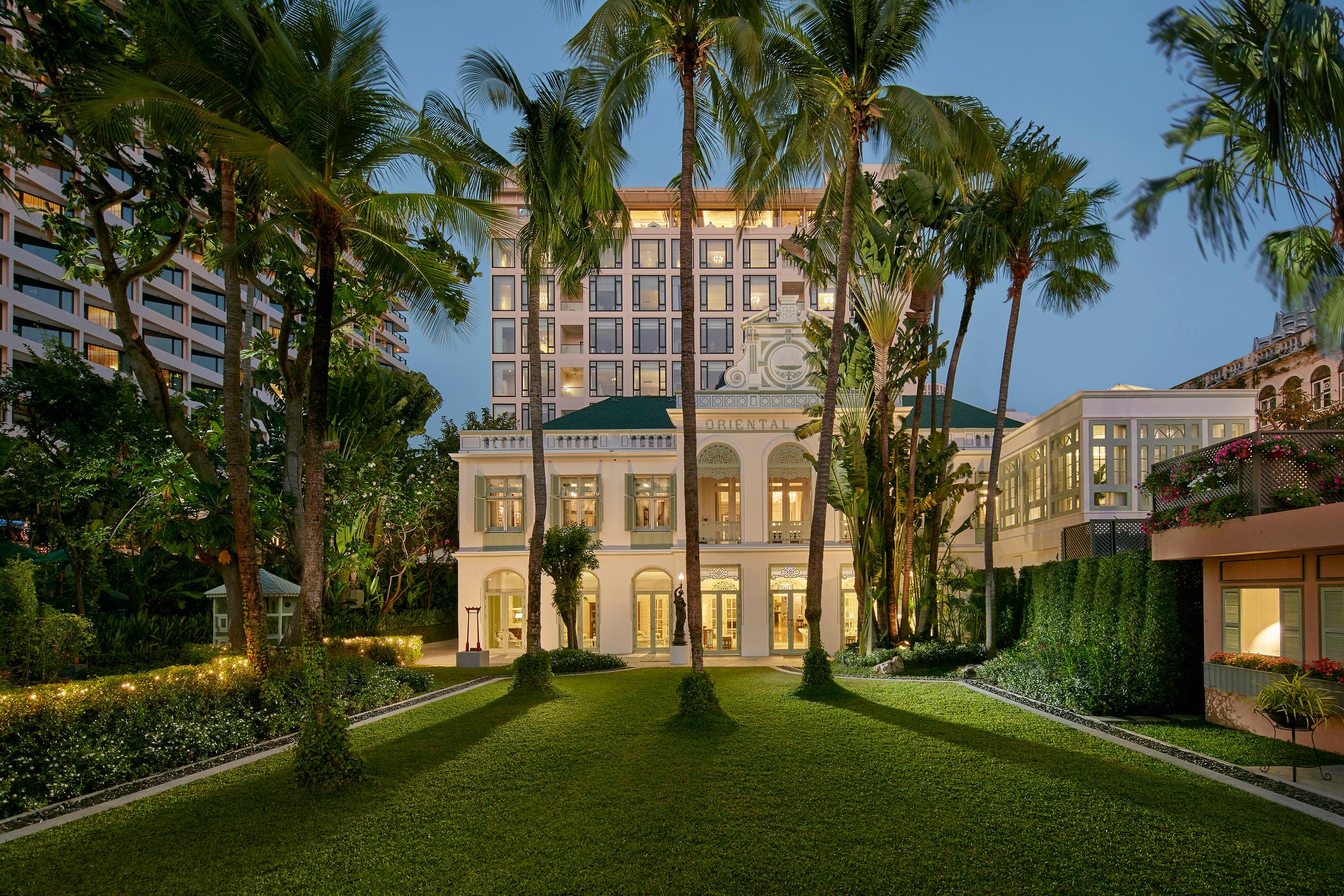
Aman and Mandarin Oriental get compared constantly, and the comparison is slightly unfair to both; they are optimized for different trips. Aman builds roughly 35 sanctuaries of under 55 rooms in places nobody else builds, and prices them from about $1,200 to $3,200+ a night. Mandarin Oriental runs 46 hotels in 27 territories, most of them large city addresses, and opens around $400–1,500. Both descend from Asia, both refuse to run a points program, and both are booked by Biirdee at preferred-partner level, which gives us a clear view of the trade-offs: Aman Tokyo is the single most-booked Tokyo hotel on our desk, and Mandarin Oriental, Tokyo is in our top three there.
The short version: Aman when the hotel is the destination, Mandarin Oriental when the city is. The long version follows, with our own numbers in it: what the same nights cost at both on 1 October 2026, what recent guests say, what our clients actually book and spend, and the five cities where you can genuinely choose. Because the searches we see most add a third name, we also cover Mandarin Oriental vs Aman vs Peninsula, and the London question of Mandarin Oriental vs the Lanesborough vs Aman.
Key Takeaways
- Aman is the higher peak (privacy, landscape, staff density); Mandarin Oriental is the broader and far better-value city brand.
- Heritage: Mandarin Oriental's lineage runs to Bangkok's 1876 Oriental and Hong Kong's 1963 Mandarin; Aman began with Amanpuri in 1988 and invented the modern resort-as-sanctuary.
- Spa: Aman for destination wellness (multi-day immersions, the point of the trip); Mandarin Oriental for the best city-hotel spa program in the world, with 13 Forbes Five-Star spas in 2026 and guest reviews that score higher whenever the spa comes up.
- Awards split by scorecard: Mandarin Oriental holds 27 Forbes Five-Star hotels to Aman's one, and two places in the top ten of The 50 Best Hotels 2026; Aman collects Michelin's Three Keys (seven hotels, among them New York, Amangiri, Amanemu and Amanpuri) and Aman Tokyo sits at No.11.
- Same nights, same engine: the cheapest Aman Tokyo offer was $4,177 a night against $1,360 at Mandarin Oriental, Tokyo in November, and Aman New York $4,471 against $1,378. Expect to pay three to four times as much for Aman in a shared city.
- Our clients book both, mostly in Japan: Aman Tokyo is the most-booked Tokyo hotel on our desk, most of our Aman nights since early 2025 have been in Japan, and stays average about three and a half nights at both brands.
- Neither runs points. Fans of M.O. is recognition-based; Aman has nothing. Partner-channel bookings add ~$100 credits and upgrade priority at both, at the same rate as direct, plus breakfast at Mandarin Oriental; most Amans include breakfast however you book.
- They meet head-to-head in five places: Tokyo, Bangkok, New York, Marrakech and Bodrum. Everywhere else the choice is made for you, including London, where Aman has no hotel and the real rivals to MO Hyde Park are the Lanesborough and the Peninsula.
Aman vs Mandarin Oriental at a Glance
| Aman | Mandarin Oriental | |
|---|---|---|
| Portfolio | ~35 properties in 20 countries | 46 hotels in 27 territories; ~25 in the pipeline |
| Heritage | Amanpuri, Phuket, 1988: Adrian Zecha's invention of the resort-as-sanctuary | The Oriental, Bangkok (1876) and the Mandarin, Hong Kong (1963), merged 1985 |
| Typical property | Under 55 rooms, vast grounds, remote sites | 100–400 rooms, landmark city addresses; a growing resort bench |
| Entry rates (2026) | ~$1,200–3,200+ a night published; the cheapest offers we could book in Tokyo, Kyoto and New York were $3,435–5,638 | $155 (Kuala Lumpur) to $1,959 (the Lutetia in Paris) a night all-in on our test dates, and $2,895 at Mayfair when only suites were left |
| Spa | Destination wellness: immersions, hydrotherapy, whole-trip programs | The best hotel-spa program anywhere, attached to city stays |
| Dining | Quiet rooms, a few venues, rarely the reason you came | Michelin-dense; the Landmark Hong Kong alone holds seven stars |
| Service | Extreme staff density, anticipatory, almost invisible | Asian service grammar at scale; Bangkok's is the industry benchmark |
| Loyalty | None (details) | Fans of M.O. pick-two privileges, recognition not points |
| Advisor perks | Upgrade priority, $100+ credit via preferred partners (breakfast already included at most Amans) | Upgrade, breakfast, ~$100 credit via the MO Fan Club rate |
| Best for | Honeymoons, resets, milestone trips, landscape | City immersion, spa-and-dining weekends, gateway-city business stays |
From Our Booking Desk: What Clients Actually Choose
Our own booking history (February 2025 to September 2026) is a useful corrective to the brochure version of this comparison. Most of the Aman nights we booked in that time were in Japan: Aman Tokyo, Aman Kyoto and Amanemu, with Amangiri, Aman New York and Amanzoe making up the rest. Our Mandarin Oriental bookings are spread far wider (Tokyo, Singapore, Bangkok, Milan, London, Doha, Abu Dhabi, Amsterdam), which is the two portfolios in miniature: Aman as the destination, MO as the gateway.
Tokyo is the one city where our clients regularly book both, and the spend tells the story. Aman Tokyo stays we booked ran from about $1,800 to $5,500 a night all-in, depending on the room category; Mandarin Oriental, Tokyo stays from about $760 to $1,900. The stays themselves are the same length: about three and a half nights on average at both brands. Clients do not stay longer at Aman to justify the price; they choose it for a shorter, quieter stretch of a longer trip, often after or before a few nights somewhere livelier.
Same Nights, Both Brands: Our Rate Check
Lowest offer per night for two adults, priced through our booking engine on 1 October 2026 for 10–13 November 2026 and 12–15 March 2027, with the taxes and service charges the engine quotes. Aman releases little inventory to online channels, so its cheapest offer was often a suite.
| City | Aman (Nov / Mar) | Mandarin Oriental (Nov / Mar) | Aman premium |
|---|---|---|---|
| Tokyo | Aman Tokyo: $4,177 (a Deluxe Suite) / $3,435 with breakfast | $1,360 / $917 | About 3x in November, 3.7x in March. |
| New York | Aman New York: $4,471 / $4,158, both with breakfast | $1,378 / $846 | About 3x in November, 5x in March. |
| Marrakech | Amanjena: only a two-bedroom pool villa was offered, about $8,350 with breakfast | $1,568 / $1,486, both with breakfast | Not like for like; expect 2–3x on entry rooms. |
| Kyoto | Aman Kyoto: $5,638 in November; no rooms in March | No Mandarin Oriental in Kyoto | The Ritz-Carlton Kyoto ($1,272 in March) is the nearest alternative. |
| Bodrum | Amanruya: closed on both dates (summer season) | Mandarin Oriental, Bodrum: closed on both dates (summer season) | Both are May to October hotels. |
Heritage: 1876 vs 1988
On lineage Mandarin Oriental wins outright, and it isn't close. The Oriental in Bangkok opened in 1876, hosted Somerset Maugham and Joseph Conrad, and marks its 150th anniversary in 2026; the Mandarin in Hong Kong (1963) was the building that taught the world what an Asian city hotel could be. The two merged in 1985, and the fan logo has been exported across five continents since, including onto genuine European monuments like the 1910 Ritz in Madrid and the Lutetia in Paris.
Aman's heritage is different in kind rather than shorter in degree. Amanpuri opened on a Phuket headland in 1988 as a private-villa community that happened to take guests, and its founder Adrian Zecha effectively invented the ultra-luxury resort as we now understand it: tiny key counts, pavilions instead of towers, the site as the star. Every "sanctuary" resort that followed (Six Senses, One&Only, the resort arms of Four Seasons and Rosewood) is downstream of that idea. If you value provenance, MO's buildings have the stories; if you value influence, Aman changed the industry more.
Spa and Wellness: Two Different Definitions
The spa question is the one we're asked most, and the answer depends on what "spa" means to you. If the spa is the trip (multi-day immersions, hydrotherapy circuits, forest bathing, a program rather than a treatment) Aman leads the industry alongside Six Senses. The Aman Spa at Amangiri is 25,000 square feet built around Navajo-influenced healing; Aman New York devotes three floors to its spa; Amanemu is an entire onsen resort. Our Aman spa and wellness guide maps the portfolio.
If the spa is what makes a city stay exceptional, Mandarin Oriental wins brand-wide; its urban spas are destinations in their own right, not amenities. The Oriental Spa in Bangkok occupies its own building across the river; Hyde Park London and the Landmark Hong Kong run programs that draw locals as much as guests; and the consistency across 46 hotels is remarkable. So: Aman for the wellness trip, Mandarin Oriental for the best spa attached to a real city.
Our review data puts numbers on that. Across 1,357 written reviews of Mandarin Oriental hotels in our sample, one in ten mentions the spa, and those reviews score 9.45 out of 10 against 9.36 for the rest: the spa lifts the stay. At individual hotels the share runs much higher: 29% of written reviews at Mandarin Oriental, Marrakech, 24% at Hyde Park, 17% in Istanbul, 16% in Boston. Aman is harder to measure, because it sells so little through online channels that most of its hotels have almost no reviews on our platform; at Amanjena, the one with a real sample, 18% of written reviews mention the spa. Marrakech, where both brands have a hotel, is the cleanest test, and on it MO's spa is the one guests talk about more.
Mandarin Oriental vs Aman Spa, Side by Side
Forbes figures are the 2026 Star Awards; review figures are our own scoring of the most recent guest reviews, pulled 1 October 2026.
| Aman | Mandarin Oriental | |
|---|---|---|
| What "spa" means | The reason for the trip: immersions, hydrotherapy, movement and multi-day programs | The best spa attached to a city hotel: signature treatments and thermal suites, consistent everywhere |
| Forbes Five-Star spas (2026) | None; Aman takes little part in Forbes ratings | 13, plus 17 Four-Star spas |
| Flagship spas | Amangiri (25,000 sq ft), Aman New York (three floors), Amanemu (an onsen resort) | The Oriental Spa in Bangkok, Hyde Park London, the Landmark Hong Kong |
| Reviews that mention the spa | Amanjena 18%; too few online reviews elsewhere to measure | 10% brand-wide; Marrakech 29%, Hyde Park 24%, Istanbul 17%, Boston 16%, Tokyo 12% |
| Score when guests mention the spa | Amanjena 9.25 | 9.45, against 9.36 when they don't |
| What it costs | Aman Tokyo ran $2,500–2,800 a night above MO Tokyo on our test dates | The same nights at MO Tokyo: $917–1,360 |
| Book it for | A wellness trip where the spa is the itinerary | A city trip where the spa is the best part of the hotel |
Service, Awards and the Question of "More Luxurious"
Both brands run Asian service grammar; they deploy it differently. Aman's staff-to-guest ratios are among the highest in hospitality, and the register is anticipatory and almost invisible; you rarely ask for anything because it has already happened. Mandarin Oriental's service is warmer and more present, and at its best (Bangkok, decisively; Hong Kong; Tokyo) it is the standard by which every other city hotel is measured. Across 46 hotels the floor is high but variance exists; across Aman's 35, it barely does.
On awards they split by scorecard. Forbes Travel Guide's 2026 Star Awards give Mandarin Oriental 27 Five-Star hotels and 13 Five-Star spas; Aman, which takes little part in the Forbes process, has one Five-Star hotel (Amansara) and no Five-Star spa. Michelin's Keys, which reward character and setting as much as polish, tilt the other way: seven Amans hold the maximum Three Keys (Aman New York, Amangiri, Amanemu, Amanpuri, Amanjiwo, Aman Venice and Amanoi) and Aman Tokyo two, against one for Mandarin Oriental, Tokyo and none for MO New York. Bangkok reverses it: the Oriental holds the maximum Three Keys. The 50 Best Hotels 2026 puts MO slightly ahead at the top (Qianmen in Beijing No.7, Bangkok No.10) with Aman Tokyo at No.11, Amangiri No.45 and Aman Nai Lert No.48.
"More luxurious" therefore has two honest answers: Aman by peak, by price and by Michelin's measure; Mandarin Oriental by the depth of its city bench and by Forbes'.
City by City, Where Both Have a Hotel
Five places offer a genuine head-to-head. Where we quote a price it is the lowest all-in offer on our test dates (10–13 November 2026, 12–15 March 2027); Aman Nai Lert is not in our booking engine, so its band is the published one.
| City | Aman | Mandarin Oriental | Our pick |
|---|---|---|---|
| Tokyo | Aman Tokyo: top floors of the Otemachi Tower, 84 rooms, Imperial Palace gardens below; cheapest offer $3,435–4,177 on our dates | Mandarin Oriental, Tokyo: floors 30–38 in Nihonbashi, skyline spa, Michelin dining; $917–1,360; 9.53 with recent guests | Aman for the room and the hush (it is our most-booked Tokyo hotel); MO for dining, the spa and a third of the rate. See Aman Tokyo vs Aman Kyoto for the Japan picture. |
| Bangkok | Aman Nai Lert Bangkok: 2025, 52 suites over Nai Lert Park, transfers and breakfast bundled; ~$1,200–1,600 | Mandarin Oriental, Bangkok: the 1876 riverside legend, 150 in 2026; $659–740 all-in on our dates; Three Michelin Keys | Mandarin Oriental. The Oriental is the city's soul and one of the best hotels on earth at a third of the price. Aman is the newer, quieter, greener alternative. |
| Marrakech | Amanjena: pavilions around a reflecting pool in the Palmeraie; only a two-bedroom pool villa was offered on our dates (about $8,350 with breakfast) | Mandarin Oriental, Marrakech: villas and suites in olive groves at the edge of the city; $1,486–1,568 with breakfast; 9.51 with recent guests | MO for the spa (mentioned in 29% of its reviews) and a fraction of the price; Amanjena for the Aman hush and the architecture. |
| Bodrum | Amanruya: 36 stone pool cottages above the Aegean, seasonal | Mandarin Oriental, Bodrum: Paradise Bay resort village, seasonal, two beaches and a busy scene | Amanruya for a couple who want to disappear; MO Bodrum for families and anyone who wants a beach club, restaurants and energy. Both were closed on our November and March dates. |
| New York | Aman New York: Crown Building, 83 rooms with fireplaces, three-floor spa, Three Michelin Keys; $4,158–4,471 with breakfast on our dates | Mandarin Oriental, New York: Columbus Circle, park views from the 38th floor up; $846–1,378 | Aman if budget is no object and quiet is the point; MO for the Central Park view at a fifth to a third of the outlay. |
Where Only One Brand Exists
Most "Aman vs Mandarin Oriental" searches are really about a city where only one of them operates, and that settles it. Hong Kong, Singapore, London, Paris, Dubai, Madrid, Munich and Geneva are Mandarin Oriental cities; Aman has no hotel in any of them as of 2026 (London and Dubai have been discussed for years; nothing has opened). In London specifically, the honest rival to MO Hyde Park is the Lanesborough or the Peninsula, not Aman. Washington, D.C. is a trick question: Mandarin Oriental left the city in 2022 (the hotel became Salamander), and Aman was never there.
The reverse holds for Aman's core geography. Utah's canyon country, a private Philippine island, the Bhutan lodge circuit, Turks and Caicos, Venice's Grand Canal, Kyoto's forest; Mandarin Oriental has no answer to Amangiri, Amanpulo, Amankora, Amanyara, Aman Venice or Aman Kyoto. Manila is the exception in progress: Mandarin Oriental is returning to the city, while Aman's Philippine property is Amanpulo, an hour's flight south on its own plane.
Mandarin Oriental vs Aman vs Peninsula
Add the Peninsula and the comparison becomes a two-against-one: Peninsula and Mandarin Oriental are the same species (Hong Kong-born city dynasties, no points, spa-and-dining led), and differ mainly in that Peninsula owns twelve hotels outright with no weak entries while MO manages nearly four times as many. Aman remains the outlier. On our review data the two dynasties are close: the Peninsula averaged 9.26 out of 10 with recent guests and had the fewest disappointed ones (6.1% under 7), Mandarin Oriental 9.21 (6.9%). All three meet in Tokyo, New York and Bangkok.
Where All Three Compete
Lowest all-in offer per night on our test dates (10–13 November 2026 / 12–15 March 2027), with the mean of each hotel's 100 most recent guest reviews where the platform has them. Michelin Keys are the 2026 selection.
| City | Aman | Mandarin Oriental | The Peninsula | Our pick |
|---|---|---|---|---|
| Tokyo | Aman Tokyo: $4,177 / $3,435; Two Keys; No.11 in The 50 Best Hotels 2026 | $1,360 / $917; 9.53 with guests; One Key | $1,479 / $1,016; 9.46 (older reviews); One Key | Aman for the hush and the room; MO for the best value and our clients' second choice; the Peninsula for the palace gardens and Ginza on foot. |
| New York | Aman New York: $4,471 / $4,158 with breakfast; Three Keys | $1,378 / $846; 8.78 | $2,331 / $1,145; 8.87; One Key | Aman if money is no object; MO for the park views at a fraction of Aman's price; the Peninsula for the Fifth Avenue address. |
| Bangkok | Aman Nai Lert: ~$1,200–1,600 (not in our engine); No.48 in The 50 Best Hotels | $659 / $740; 9.58; Three Keys; No.10 in The 50 Best Hotels | $320 / $337; 9.20 | The Oriental, decisively; the Peninsula across the river at half its price; Aman for a garden-quiet hideaway in the center. |
Adding Rosewood
If your trip is a gateway city, choose between the two dynasties using Peninsula vs Mandarin Oriental, where we score their service city by city; if it is a resort or a reset, Aman wins by default.
Add Rosewood and the logic shifts again: Rosewood is the icon collector (the Carlyle, the Crillon), sitting between the two on price and closer to MO in city coverage. We break that pair down in Rosewood vs Mandarin Oriental and Rosewood against Aman in Aman vs Rosewood. For all five brands on one page, see luxury hotel brands compared.
Mandarin Oriental vs the Lanesborough vs Aman: the London Question
A surprising number of people search this trio, and the first answer is that Aman has no hotel in London (as of October 2026). The nearest Amans for a short hop from London are Aman Le Mélézin in Courchevel in winter and Aman Venice. So the real London question is what comes closest to the Aman experience, and the answer is not the obvious one. The Lanesborough (Oetker Collection, 93 rooms and suites on Hyde Park Corner) gives every room a butler, which is the nearest any London hotel comes to Aman's staff density; Mandarin Oriental Hyde Park, ten minutes west along Knightsbridge, has the park, the spa and Dinner by Heston; and the Peninsula London faces the Lanesborough across Hyde Park Corner with the newest rooms in town.
Our data separates them more clearly than the brochures do. The Lanesborough had the lowest disappointment rate of any London hotel we scored (4% of recent guests under 7), and 84% of its written reviews talk about the staff, the highest share in our London set: that is the butler model showing up in the data. Mandarin Oriental Hyde Park was the cheapest of the three in November (the Lanesborough in March), and its spa is the draw: 24% of its written reviews mention it. The Peninsula and the Lanesborough scored almost identically (9.43 and 9.42 out of 10); MO Hyde Park, at 9.12, is held back by complaints about noise and thin walls. Our verdict: the Lanesborough for the most Aman-like stay in London, MO Hyde Park for the spa and the park, the Peninsula for the newest hardware.
London Side by Side
Lowest all-in rate per night on our test dates (10–13 November 2026 / 12–15 March 2027); mean of the 100 most recent guest reviews, with the share scoring 9+ and the share under 7; Michelin Keys 2026 and Forbes 2026.
| Hotel | Rate (Nov / Mar) | Recent guest score | Awards | Best for |
|---|---|---|---|---|
| The Lanesborough | $1,259 / $975 | 9.42 · 86% · 4% | Two Michelin Keys; Forbes Four-Star | A butler for every room: the most Aman-like service in London. |
| Mandarin Oriental Hyde Park | $1,135 / $1,032 | 9.12 · 80% · 9% | Three Michelin Keys; Forbes Five-Star | The park, the spa and Dinner by Heston. |
| The Peninsula London | $1,675 / $1,251 | 9.43 · 90% · 8% | Three Michelin Keys; Forbes Four-Star | The newest rooms at Hyde Park Corner. |
| Mandarin Oriental Mayfair | $2,895 with breakfast (only suites left) / $1,323 | 8.52 · 72% · 14% | Two Michelin Keys; Forbes Four-Star | A 50-key Mayfair hideaway, still finding its feet. |
| Aman | No London hotel | Not applicable | Not applicable | Fly to Aman Venice or, in winter, Aman Le Mélézin. |
Check Live Rates at The Lanesborough
The Oetker Collection's Regency landmark on Hyde Park Corner, with a butler for every room. We hold the same rate as booking direct, with partner benefits attached where the hotel offers them.
See Live RatesAman vs Mandarin Oriental FAQs
Which is more luxurious, Aman or Mandarin Oriental?
Aman, by peak and by price; its staff density, privacy and sites are unmatched, and it costs two to three times as much. Mandarin Oriental is the more luxurious city experience for the money, with the best spa and restaurant program of any hotel group and a very high floor across 46 hotels.
Is Aman more expensive than Mandarin Oriental?
Yes, substantially. We priced the same nights at both on 1 October 2026: in Tokyo the cheapest Aman offer was $4,177 a night against $1,360 at Mandarin Oriental (November) and $3,435 against $917 (March); in New York, Aman was $4,471 against $1,378. Expect three to four times the price in a shared city. What our own clients spent tells the same story: about $1,800–5,500 a night at Aman Tokyo against $760–1,900 at Mandarin Oriental, Tokyo.
Mandarin Oriental vs Aman spa: which is better?
Aman for destination wellness, where the spa is the trip; Mandarin Oriental for city-hotel spas, where its program is the best in the world. MO holds 13 Forbes Five-Star spas in 2026 (Aman none), and in our review data MO guests who mention the spa score their stay higher than those who don't. In Marrakech, the one city where both have enough reviews to compare, the spa comes up in 29% of MO's written reviews against 18% at Amanjena. Bangkok's Oriental Spa and Amangiri's 25,000-square-foot Aman Spa are the flagships of each philosophy.
Which brand has more heritage?
Mandarin Oriental: the Bangkok flagship dates to 1876 and Hong Kong's to 1963. Aman is a 1988 brand, but it invented the modern sanctuary resort, so its influence on luxury hospitality arguably exceeds its age.
Do Aman or Mandarin Oriental have loyalty programs?
Neither has points. Mandarin Oriental's Fans of M.O. is a free recognition program (choose two privileges per direct stay); Aman has no program at all. At both, booking through a preferred-partner agency such as Biirdee adds a ~$100 credit and upgrade priority at the same rate as direct; at Mandarin Oriental it adds breakfast too, which most Amans already include however you book.
Mandarin Oriental vs Aman vs Peninsula: which should I book in Tokyo?
Aman Tokyo if the hotel is the point of the trip; it is the most-booked Tokyo hotel on our desk and holds Two Michelin Keys, but its cheapest offer on our test dates was $3,435–4,177 a night. Mandarin Oriental, Tokyo for the best value of the three ($917–1,360) and the best recent guest scores we could measure (9.53 out of 10). The Peninsula ($1,016–1,479) for the location opposite the Imperial Palace gardens.
Is there an Aman in London? How does Mandarin Oriental compare with the Lanesborough?
There is no Aman in London as of October 2026. The closest thing to Aman-style service in the city is the Lanesborough, which gives every room a butler; it scored 9.42 out of 10 with recent guests and had the lowest disappointment rate of any London hotel we measured. Mandarin Oriental Hyde Park scored 9.12, has the better spa and the park, and was cheaper on our November dates ($1,135 against $1,259 a night).
Which has won more awards, Aman or Mandarin Oriental?
It depends on the scorecard. Forbes Travel Guide 2026: Mandarin Oriental 27 Five-Star hotels and 13 Five-Star spas, Aman one Five-Star hotel. Michelin Keys 2026 favour Aman, with Three Keys at seven hotels: Aman New York, Amangiri, Amanemu, Amanpuri, Amanjiwo, Aman Venice and Amanoi. The 50 Best Hotels 2026 has Mandarin Oriental Qianmen at No.7 and Bangkok at No.10, with Aman Tokyo at No.11.
Aman or Mandarin Oriental for a honeymoon?
Aman in most cases; privacy and landscape are its core product, and nothing in the MO portfolio matches Amanpulo or Amangiri for a milestone trip. Mandarin Oriental honeymoons shine when the couple wants a great city woven in: Bangkok, Bodrum or Lake Como. Our Aman honeymoon guide maps the best properties.
What Biirdee Does
A concierge desk that books Aman every week: paid by the hotel, never by you
Biirdee Travel is a luxury travel agency and concierge, and Aman is our most-requested brand. We know which rooms to ask for, when each property really sells out, and how to make a reservation carry weight with the hotel. Here is exactly how it works.
Tell us the trip
Property or shortlist, rough dates, who’s traveling. The form takes two minutes and commits you to nothing.
A concierge replies within hours
A real person checks live availability, steers you honestly between properties, and confirms the exact perks your stay qualifies for: a $100+ property credit and upgrade, early check-in and late check-out priority where available.
Book at the same rate as aman.com
Aman pays our commission out of the rate you’d pay anyway, so the perks genuinely cost you nothing. Before and during the trip, one concierge on WhatsApp handles requests, transfers, dining, and changes.
Flying to your Aman? The same team books business and first class: flights and hotel aligned as one itinerary, one point of contact.
Biirdee · Aman Preferred Partner
We Book Both at Partner Level
Aman partner perks at one, the MO Fan Club stack at the other: same rates as direct, credits and upgrade priority attached, and an honest recommendation on which fits the trip.
Questions?[email protected]
Prefer to book it yourself at net fares?
Biirdee Pro members book flights & hotels at net rates: $100/mo, cancel anytime.
Keep reading
Related Guides
Mandarin Oriental
Mandarin Oriental vs Raffles: An Honest Comparison (and Where Peninsula Fits)
Mandarin Oriental
Mandarin Oriental vs Ritz-Carlton: An Honest Comparison
Aman
Aman Spa & Wellness: The Best Properties for a Reset
Luxury Travel
The Best Luxury Hotels in London, Honestly Ranked
Aman
Aman vs Four Seasons: Which Luxury Brand Fits Your Trip?
Aman
Aman vs Rosewood: Two Philosophies of Ultra-Luxury
The Peninsula
Peninsula vs Mandarin Oriental: Service, Rates and Verdicts
Rosewood
Rosewood vs Mandarin Oriental: An Honest Comparison
Mandarin Oriental
Mandarin Oriental Hotels: Every Property & Fans of M.O.
Luxury Travel
Aman vs Four Seasons vs Rosewood vs Mandarin Oriental vs Peninsula: An Honest Comparison