Rosewood vs Peninsula: An Honest 2026 Comparison
Two Hong Kong dynasties, opposite instincts: the 42-hotel collector of irreplaceable buildings versus the family that has opened twelve hotels in a century and majority-owns every one.
By Biirdee Travel, Luxury Travel Concierge · Updated October 3, 2026
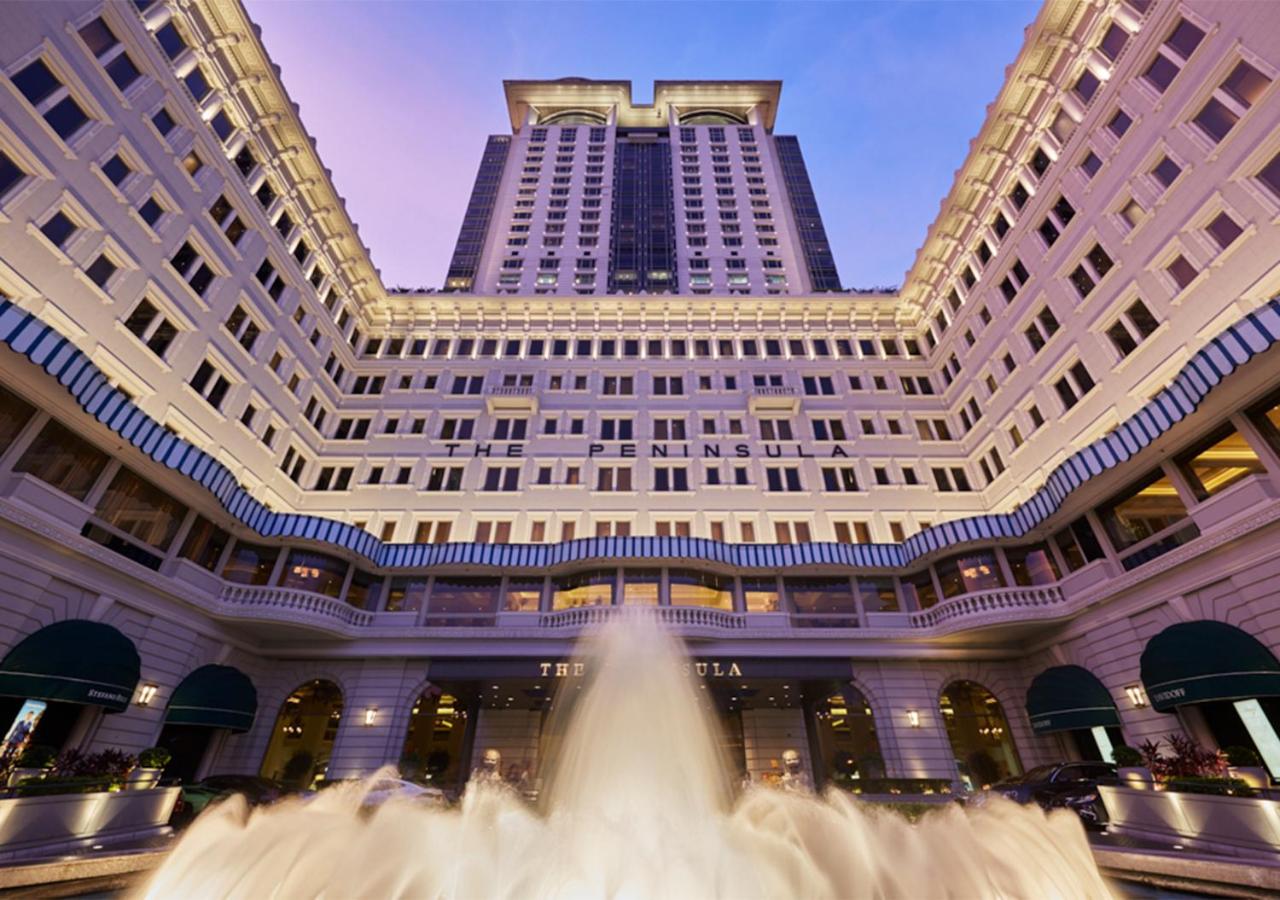
Rosewood vs Peninsula is a contest between two Hong Kong-headquartered families with opposite ideas of what a luxury hotel group should be. Rosewood, owned by Chow Tai Fook's New World, runs 42 hotels as of 2026, after the fastest opening run in its history, and collects irreplaceable buildings: the Carlyle, the Hôtel de Crillon, London's former US Embassy. The Peninsula, owned by the Kadoorie family's Hongkong and Shanghai Hotels company, has opened exactly twelve hotels in nearly a hundred years and majority-owns each of them; in the 2026 MICHELIN Keys, The Peninsula London holds Three. The short verdict: Rosewood for character, design and icon addresses; the Peninsula for consistency, service depth and the certainty that there is no weak entry to land in.
Biirdee books both at partner level (Rosewood Elite-grade benefits at one, PenClub-grade at the other), so this is a working comparison. On 1 October 2026 we also priced the same stays at both brands and scored their most recent guest reviews ourselves, so the verdicts below run on our own numbers: heritage, the consistency-versus-character trade, service and spa, the cities where you actually get to choose, and the three-way question we hear most often, Mandarin Oriental vs Rosewood vs Peninsula.
Key Takeaways
- Rosewood is the higher-variance, higher-character bet: 42 hotels, no two alike. The Peninsula is the higher floor: twelve owned hotels, no pipeline, no weak entries.
- Neither runs points. Rosewood Elite and PenClub are invitation-only travel-advisor programs, reachable only through an affiliated advisor; the booking channel is the loyalty program.
- Rates on our same-dates check (priced 1 October 2026): the median lowest rate was $1,058 a night at Rosewood and $1,114 at the Peninsula in November, but $908 against $734 in March and $943 against $788 in July. The Peninsula's cheapest are Manila ($236–292) and Bangkok ($296–574); Rosewood's are Phnom Penh, Doha and Abu Dhabi.
- Guests: the Peninsula averaged 9.26 out of 10 across 900 recent reviews at nine hotels, Rosewood 9.14 across 1,400 at 14; 6.1% of Peninsula guests scored under 7, against 8.8% at Rosewood.
- True head-to-heads are few: Hong Kong, London, Paris, Beijing, Bangkok, New York. On our guest scores the Peninsula wins four (London and Beijing clearly, Hong Kong and Paris by a whisker) and Rosewood two (the Carlyle in New York, and Bangkok); the Peninsula was also cheaper on all four of our stays in Hong Kong and Paris, Rosewood in London.
- Geography decides most trips: no Rosewood in Tokyo, Shanghai, Chicago or Los Angeles proper; no Peninsula resorts at all, and none in Mexico, the Caribbean, the Gulf, or Europe beyond Paris, London and Istanbul.
- Add Mandarin Oriental and it clarifies: MO and the Peninsula are the same Asia-born, service-led species; Rosewood is the design-led outlier. Spas to MO, consistency to the Peninsula, icons to Rosewood.
Rosewood vs Peninsula at a Glance
| Rosewood | The Peninsula | |
|---|---|---|
| Portfolio | 42 hotels and resorts as of 2026; five openings within about a year, five more in the pipeline | 12 hotels, all majority-owned; no pipeline |
| Ownership | Chow Tai Fook / New World (Hong Kong); a mix of owned and managed properties | Hongkong and Shanghai Hotels (Kadoorie family); owner and operator |
| Heritage | Brand born 1979 (Mansion on Turtle Creek, Dallas); buildings back to 1758 | Brand born December 1928 (The Peninsula Hong Kong) |
| Philosophy | "A Sense of Place": no two hotels alike | One owned flagship per city, built or restored over a decade |
| Signature hotels | Rosewood Hong Kong, the Carlyle, Hôtel de Crillon, Las Ventanas | Hong Kong, Tokyo, Chicago, Paris |
| Service style | Residential, personal, looser scripts | Page-boy heritage, long staff tenure, exceptional guest recall |
| Spa | Asaya: strongest in Hong Kong and Phuket, still maturing; Forbes Five-Star spas at Mayakoba and Miramar Beach | Forbes Five-Star spas in Hong Kong, New York, Tokyo and Shanghai; not brand-defining |
| Dining & bars | Destination bars: Bemelmans, Scarfes, DarkSide | Gaddi's (French, since 1953), a Cantonese room at most properties, rooftops in Paris, London, New York and Chicago |
| Loyalty | None; Rosewood Elite is advisor-only | None; PenClub is advisor-only |
| Median lowest rate on our dates (Nov / Dec / Mar / Jul) | $1,058 / $1,040 / $908 / $943 | $1,114 / $959 / $734 / $788 |
| Best for | Icon addresses, design, resort trips | Gateway-city certainty, business travel, first visits to Asia |
Rosewood vs Peninsula on Our Numbers
On 1 October 2026 we priced the same stays at every Rosewood and every Peninsula through our own booking engine (the one behind hotels.biirdee.com) and scored the 100 most recent verified guest reviews at each hotel ourselves: the mean out of 10, the share scoring 9 or more and the share under 7. The test stays were 10–13 Nov 2026, 27–30 Dec 2026, 12–15 Mar 2027 and 15–18 Jul 2027; rates are the lowest per night the engine charged that day, and taxes the hotel collects at checkout are extra. Only hotels with at least 50 reviews written since June 2024 count toward the guest averages: 14 Rosewoods and nine Peninsulas.
The Two Brands, Measured
Guest rows are our scoring of the 100 most recent verified reviews per hotel; awards are the Forbes Travel Guide 2026 Star Awards, the 2026 MICHELIN Keys and The 50 Best Hotels 2026. The last row is our own desk.
| Rosewood | The Peninsula | |
|---|---|---|
| Hotels and recent reviews scored | 14 hotels, 1,400 reviews | 9 hotels, 900 reviews |
| Mean recent guest score | 9.14 / 10 | 9.26 / 10 |
| Guests scoring 9 or more | 80% | 85% |
| Guests scoring under 7 | 8.8% | 6.1% |
| Highest and lowest recent score | Sao Paulo 9.70; Baha Mar 8.10 | Beijing 9.61; New York 8.87 |
| Long-run guest score under 9.0 | 1 of 28 rated hotels | 0 of 11 |
| Who writes the reviews | couples 54%, families 21%, solos 16% | couples 47%, families 23%, solos 20% |
| Reviews mentioning the spa, and their score | 5.7%, averaging 8.78 | 7.9%, averaging 9.47 |
| Forbes Five-Star hotels (2026) | 11 of 36 rated | 8 of 12 |
| Forbes Five-Star spas (2026) | 2 | 4 |
| MICHELIN Three-Key hotels (2026) | 6, of 39 keyed hotels | 1 (The Peninsula London) |
| The 50 Best Hotels 2026 | 4 in the top 50, 7 in the top 100; No.1 Rosewood Hong Kong | 2 in the top 50, 3 in the top 100; No.31 Istanbul, No.46 Hong Kong |
| Median lowest rate: Nov / Dec / Mar / Jul | $1,058 / $1,040 / $908 / $943 | $1,114 / $959 / $734 / $788 |
| Breakfast for two adds (median, same room) | $161–225 a night | $67–123 a night |
| Free cancellation adds (median) | 1–4% | 2–14% |
| Agents' price checks since June 2026 | 44 (12 hotels) | 24 |
What the Numbers Say
On guests the Peninsula is the stronger brand: 9.26 against 9.14, 85% scoring 9 or more against 80%, and fewer disappointed guests (6.1% under 7 against 8.8%). Its floor is the story. The lowest-scoring Peninsula we could rank, New York, scored 8.87; three of the 14 Rosewoods we could rank sit below that (Jeddah, London and Baha Mar), and on long-run platform scores none of the Peninsula's 11 rated hotels is under 9.0. Rosewood has the higher peak (Sao Paulo at 9.70 against the Peninsula Beijing's 9.61), and the awards split the same way: the Peninsula puts two-thirds of its hotels in Forbes' Five-Star tier (8 of 12) against under a third of rated Rosewoods (11 of 36), while Rosewood holds No.1 in The 50 Best Hotels 2026 and six Three-Key hotels to the Peninsula's one.
On price the two trade places through the year: the Peninsula's median was higher in November ($1,114 against $1,058) and lower on our other three stays, by the widest margin in March ($734 against $908). The spa favors the Peninsula: reviews that mention it average 9.47 there and 8.78 at Rosewood, and it has four Forbes Five-Star spas to Rosewood's two. Breakfast is far cheaper to add at the Peninsula: a median $67–123 a night for two, against $161–225 at Rosewood.
How the Ten Brands Compare on Our Numbers
Our own numbers, pulled 1 October 2026: the 100 most recent verified reviews at every hotel with enough of them on our booking platform, the Forbes Travel Guide 2026 ratings, and the lowest rate per night on the same three stays (10–13 Nov 2026, 12–15 Mar 2027, 15–18 Jul 2027) at every hotel each brand had on sale. Aman and Cheval Blanc sell too few rooms online to score.
| Brand | Recent guest score | Guests 9+ | Guests under 7 | Forbes Five-Star hotels | Median lowest rate (Nov / Mar / Jul) | Breakfast for two adds |
|---|---|---|---|---|---|---|
| Belmond | 9.53 (15 hotels) | 89% | 4.7% | 7 of 18 | $941 / $877 / $1,238 | $114–142 |
| Maybourne | 9.40 (4 hotels) | 88% | 5% | 5 of 6 | $1,240 / $1,144 / $1,438 | $112–184 |
| The Peninsula | 9.26 (9 hotels) | 85% | 6.1% | 8 of 12 | $1,114 / $734 / $788 | $67–123 |
| Mandarin Oriental | 9.21 (31 hotels) | 82% | 6.9% | 27 of 40 | $740 / $704 / $812 | $124–200 |
| Four Seasons | 9.17 (72 hotels) | 82% | 8.2% | 42 of 115 | $838 / $806 / $789 | $68–247 |
| Rosewood | 9.14 (14 hotels) | 80% | 8.8% | 11 of 36 | $1,058 / $908 / $943 | $161–225 |
| Dorchester Collection | 9.14 (3 hotels) | 82% | 10.7% | 5 of 10 | $1,446 / $2,000 / $1,667 | $79–89 |
| Ritz-Carlton | 8.89 (62 hotels) | 76% | 12.3% | 21 of 106 | $615 / $663 / $676 | $74–88 |
| Aman | Too few reviews | Not scored | Not scored | 1 of 19 | Too few on sale to compare | $112–117 |
| Cheval Blanc | Too few reviews | Not scored | Not scored | 3 of 6 | Too few on sale to compare | $76–120 |
Same City, Same Nights: Rosewood vs Peninsula
The six cities where we scored both brands. Guest score: mean of the 100 most recent verified reviews (out of 10; † older review window), then the hotel's place among the luxury hotels we scored in that city. Rates: lowest per night on 10–13 Nov 2026 / 27–30 Dec 2026 / 12–15 Mar 2027 / 15–18 Jul 2027 through our booking engine, priced 1 October 2026.
| City | Rosewood | The Peninsula | On our numbers |
|---|---|---|---|
| Hong Kong | Rosewood Hong Kong: 9.41 (5th of 6) · $3,128 (suites only) / $1,260 / $927 / $943 | The Peninsula Hong Kong: 9.46 (4th of 6) · $816 / $986 / $627 / $598 | Level with guests; the Peninsula was cheaper on all four stays. Rosewood is No.1 in The 50 Best Hotels 2026, the Peninsula No.46. |
| London | Rosewood London: 8.73 (13th of 14) · $948 / $1,097 / $774 / $895 | The Peninsula London: 9.43 (3rd of 14) · $1,675 / $1,772 / $1,251 / $1,514 | The Peninsula, clearly, with guests and with Three MICHELIN Keys; Rosewood London was cheaper on all four stays. |
| Paris | Hôtel de Crillon: 9.54 † (2nd of 7) · $2,094 / $2,571 / $2,237 / $2,409 | The Peninsula Paris: 9.60 † (1st of 7) · $1,796 / $2,337 / $2,146 / $2,235 | Level with guests (both on older reviews); the Peninsula was cheaper on all four stays. The Crillon is No.14 in The 50 Best Hotels 2026. |
| New York | The Carlyle: 9.32 (1st of 7) · $2,104 / $1,282 / $839 / $1,491 | The Peninsula New York: 8.87 (4th of 7) · $2,331 / $1,665 / $1,145 / $1,304 | The Carlyle: the higher score and the lower rate on three of four stays. |
| Bangkok | Rosewood Bangkok: 9.40 (4th of 5) · $336 / $767 / $286 / $322 | The Peninsula Bangkok: 9.20 (5th of 5) · $320 / $574 / $337 / $296 | Rosewood with guests; the Peninsula was cheaper on three of four stays. |
| Beijing | Rosewood Beijing: 8.83 † (4th of 6) · $407 / $407 / $407 / $414 | The Peninsula Beijing: 9.61 (3rd of 6) · No rooms / $461 (suites only) / $385 (suites only) / $618 (suites only) | The Peninsula: 9.61 with guests, and all-suite rooms from $385 in March. |
Reading the Head-to-Heads
On guest scores the Peninsula wins four of the six shared cities (London and Beijing clearly, Hong Kong and Paris by a whisker) and Rosewood two (the Carlyle in New York, and Bangkok). On price the Peninsula was cheaper on every one of our stays in Hong Kong and Paris and on three of four in Bangkok; Rosewood was cheaper on all four in London and on three of four at the Carlyle. Beijing splits: the Peninsula sells only suites there, from $385 in March, while Rosewood held at $407–414.
Our verdict: the Peninsula is the better bet in four of the six cities where both compete, and the safer brand overall, with the higher floor and the cheaper breakfast. Rosewood wins New York with the Carlyle and Bangkok on guest scores, takes London only on price, and owns every resort question, because the Peninsula has no resorts at all.
What Our Desk Books at Each
Rosewood is the second most-priced brand on our desk, after Four Seasons (44 price checks across 12 hotels since June 2026); agents priced Peninsulas 24 times. Rosewood bookings were mostly city stays averaging 2.9 nights: Rosewood Hong Kong (twice), the Carlyle (a five-night summer stay), Munich, Vienna, Bangkok, Hotel Georgia, a September group at Rosewood Amsterdam and a five-night September stay at Las Ventanas. Peninsula bookings were The Peninsula London (a suite-level stay in September) and The Peninsula Hong Kong (June, about $1,030 a night). One pattern worth knowing: in Tokyo our clients have chosen Mandarin Oriental over the Peninsula every time so far.
Ownership and Heritage: Two Hong Kong Dynasties
The two brands share a home city and little else. The Peninsula is the older institution by half a century: The Peninsula Hong Kong opened in December 1928, built to be the finest hotel east of Suez, and the page boys, the lobby tea, the green Rolls-Royce fleet and the one-flagship-per-city discipline were all invented there first. The Kadoorie family still controls the company and the patience has not changed: Paris took until 2014, London and Istanbul until 2023, after decades of site hunting.
Rosewood was born in Dallas in 1979 with the Mansion on Turtle Creek and stayed a small American collection until Chow Tai Fook's New World turned it into hospitality's most aggressive icon collector. The paradox is that the younger brand owns the older buildings: the Hôtel de Crillon (1758) on the Place de la Concorde, the Carlyle (1930) on Madison Avenue, Eero Saarinen's former US Embassy on Grosvenor Square. So the heritage verdict splits; the Peninsula is the older institution; Rosewood holds the more storied addresses.
Consistency vs Character: 12 Owned Hotels vs 42 Collected Ones
This is the structural difference behind every city verdict. The Peninsula owns its hotels, builds or restores them over a decade and runs each as a flagship, which is why regulars say the brand has no bad nights; on our numbers its lowest-scoring hotel (New York, 8.87) still beats three of the 14 Rosewoods we could rank. The cost is coverage: six Asian cities, three American, three European, and no resorts anywhere.
Rosewood runs the opposite play. Its 42 hotels grow through management agreements as much as ownership, rather than the Peninsula's single-owner model; five opened within about a year (Amsterdam, the Chancery, Mandarina, Courchevel, Doha), and "A Sense of Place" means the Crillon, a Bensley tented camp in Luang Prabang and a Hawaiian village resort share a flag and nothing else. At the flagships that produces hotels with more personality than anything the Peninsula owns; across the long tail the floor is lower, the same theme that runs through Rosewood vs Four Seasons. Choosing blind in a city you do not know: the Peninsula. Choosing the hotel you will still be talking about in ten years: usually Rosewood.
Service, Spa and Dining
Service is the Peninsula's home ground. Staff tenure is unusually long, guest recall is a house obsession; eight of its twelve hotels are Forbes Five-Star in 2026, against 11 of 36 rated Rosewoods, and the in-house technology (bedside panels, the valet box that returns your shoes without a knock) is the most genuinely useful in the industry. Our review data agrees: reviews that mention service average 9.18 at the Peninsula and 8.95 at Rosewood. Rosewood personalizes residentially: fewer scripts, more latitude for staff, and at Rosewood Hong Kong or the Carlyle it feels like belonging to a very good private house. Hotel for hotel the Peninsula is more reliable; at its peaks Rosewood is more memorable.
Neither is the spa leader: that is Mandarin Oriental, brand-wide. The Peninsula's Hong Kong and Paris spas compete individually; Rosewood's Asaya is ambitious but still maturing. Guests notice: reviews that mention the spa average 9.47 at the Peninsula and 8.78 at Rosewood. On dining the temperaments diverge: most Peninsulas carry a serious Cantonese room (Spring Moon in Hong Kong, Michelin-starred Yi Long Court in Shanghai, Canton Blue in London) alongside a landmark Western kitchen where the house has one, Gaddi's having served French food in Hong Kong since 1953. Add a rooftop wherever the building allows: L'Oiseau Blanc in Paris, Brooklands in London, Salon de Ning in New York, Z Bar in Chicago. Rosewood builds the bar the city goes to: Bemelmans, Scarfes, DarkSide. Formal dinner: the Peninsula. The room you end the night in: Rosewood.
City by City: Rosewood vs Peninsula, and Where Only One Shows Up
What each hotel is and our pick, including the cities where only one brand is present. Same-dates rates and guest scores for the six shared cities are in the table above; for single-brand cities we show the lowest rates on our four test stays, priced 1 October 2026.
| City | Rosewood | The Peninsula | Our pick |
|---|---|---|---|
| Hong Kong | Rosewood Hong Kong: the modern flagship on Victoria Dockside; No.1 in The 50 Best Hotels 2026 | The 1928 original: the lobby tea ritual, fourteen green Phantoms; No.46 in The 50 Best Hotels 2026 | The closest head-to-head these two brands offer. Rosewood for the most complete modern hotel and the waterfront position; the Peninsula for the 1928 history, the lobby tea ritual and the lower rate. |
| London | Rosewood London, Holborn, and the all-suite Chancery, Mayfair (2025) | The Peninsula London (2023), Hyde Park Corner, Peter Marino interiors; Three MICHELIN Keys in 2026 | The Peninsula on our numbers: 9.43 against Rosewood London's 8.73 with guests, and the better pure new build. Rosewood London is the cheaper stay on every date we checked; the Chancery is too new to score. |
| Paris | Hôtel de Crillon: 1758, official Palace status; No.14 in The 50 Best Hotels 2026 | The Peninsula Paris, Avenue Kléber: rebuilt over four years, L'Oiseau Blanc rooftop | The Crillon; the building settles it. The Peninsula, level with guests and cheaper on all four of our stays, is the value play, Eiffel-view rooftop included. |
| Beijing | Rosewood Beijing: the 2014 Asia debut in Chaoyang | All-suite since 2017, ~60 m² entry, a walk from the Forbidden City | The Peninsula: all-suite rooms from $385 in March, a walk from the Forbidden City, and 9.61 with guests against Rosewood's 8.83 †. |
| Bangkok | Rosewood Bangkok: sculptural tower with sky villas on Ploenchit | W-shaped riverside tower (1998), every room facing the Chao Phraya | The Peninsula for a first visit and the river; Rosewood for a sleek stay in the shopping district, and the higher guest score (9.40 against 9.20). |
| Shanghai & Guangzhou | No Shanghai; Rosewood Guangzhou on floors 95–108 of the CTF Finance Centre; $352–412 on our stays | The Peninsula Shanghai (2009), Art Deco on the Bund; $471–612 on three of our four stays ($975, suites only, in November). No Guangzhou | The city decides. The Bund address is among the Peninsula's best. |
| New York | The Carlyle: 1930, Madison and 76th, Bemelmans | 1905 Beaux-Arts at 700 Fifth Avenue, Salon de Ning rooftop | The Carlyle for the singular experience, the higher guest score (9.32 against 8.87) and the lower rate on three of our four stays; the Peninsula for Fifth Avenue at the door. |
| Los Angeles | None in LA; Rosewood Miramar Beach, Montecito, roughly 90 minutes up the coast; $1,691–3,659 on our stays | The Peninsula Beverly Hills (1991): villas, rooftop pool, 24-hour check-in; $1,088–2,030 on our stays | Different trips. The Peninsula for the city and awards season; Miramar for the beach weekend. |
| Chicago | None | Purpose-built 2001, ~340 oversized rooms; $463–1,002 on our stays | The Peninsula by default, since Rosewood has no Chicago hotel. On our guest scores Four Seasons Chicago (9.86) leads the city; the Peninsula (9.25) is second of the three we scored. |
| Tokyo & Japan | No Tokyo; Rosewood Miyakojima (2025), Okinawa, is the Japan entry | Purpose-built 2007 opposite the Imperial Palace gardens, ~54 m² entry rooms; $747–2,655 on our stays | The Peninsula without contest; Miyakojima answers a different question. |
Reading the Map
Most Rosewood-or-Peninsula decisions are made by geography before taste gets a vote. The Peninsula has no resorts, so Cabo, the Riviera Maya, Hawaii, the Caribbean and Phuket are Rosewood by default (Las Ventanas from $1,010, Mayakoba from $945 and Kona Village from $1,476 a night on our month-by-month checks), as are the Gulf, Munich, Vienna, Madrid and Amsterdam. Going the other way, The Peninsula Tokyo, Shanghai, Chicago, Manila, Istanbul and Beverly Hills have no Rosewood rival. Where both exist, Rosewood takes the cities where it bought an icon (Paris and New York), the Peninsula takes the cities where it built on the best site (Beijing, and London on our guest scores), Bangkok splits between Rosewood's guest scores and the Peninsula's river, and Hong Kong, both flagships on the Kowloon waterfront, a short walk apart, is whether you want the modern benchmark or the 1928 legend.
Mandarin Oriental vs Rosewood vs Peninsula
The three-way version is the one most people are really asking, and it simplifies rather than complicates. Mandarin Oriental and the Peninsula are the same species: born in the same Asian port-city world (the Oriental in Bangkok in 1876 and the Mandarin in Hong Kong in 1963; the Peninsula in Kowloon in 1928), exporting Asian service grammar to gateway cities, spa-and-dining led. They differ on strategy: the Peninsula owns twelve with no weak entries; MO manages 46 in 27 territories with ~25 more coming and more variance across the long tail. Rosewood is the outlier: a design-led collector whose personality changes with every city.
So the category verdicts hold. Spa: Mandarin Oriental, brand-wide. Consistency: the Peninsula, then MO, then Rosewood. Icons: Rosewood, then MO (the 1876 Oriental, the Landmark reopened in June 2026 with seven Michelin stars, the Ritz Madrid), then the Peninsula, whose 1928 Hong Kong original is a genuine icon while the rest are superb buildings that are rarely the reason you book. Coverage: MO and Rosewood are within a few hotels of each other, MO edges it on territories and on Asia, and both dwarf the Peninsula's twelve cities. In Hong Kong all three share the harbour and the ranking is taste: Rosewood for hardware, the Peninsula for history, the Landmark for dining. The pairwise deep dives are Rosewood vs Mandarin Oriental and Peninsula vs Mandarin Oriental; all five top brands sit together in luxury hotel brands compared.
The Three-Way at a Glance
| Rosewood | The Peninsula | Mandarin Oriental | |
|---|---|---|---|
| Portfolio | 42, growing fast | 12, all majority-owned | 46 in 27 territories, ~25 coming |
| Born | 1979, Dallas | 1928, Hong Kong | 1876 Bangkok / 1963 Hong Kong |
| Owner | Chow Tai Fook / New World | Hongkong and Shanghai Hotels (Kadoorie) | Jardine Matheson |
| Spa | Asaya, improving | Strong individually | The benchmark, brand-wide |
| Consistency | Widest variance | Near-absolute | High floor, some variance |
| Signature hotels | Crillon, Carlyle, Hong Kong | Hong Kong (the 1928 icon), Tokyo, Chicago | Bangkok, the Landmark, the Ritz Madrid |
| Loyalty | None; Elite is advisor-only | None; PenClub is advisor-only | Fans of M.O. recognition, not points |
| Median lowest rate on our dates (Nov / Mar / Jul) | $1,058 / $908 / $943 | $1,114 / $734 / $788 | $740 / $704 / $812 |
| Wins on | Design, icons, resorts | Consistency, business stays | Spas, dining, Asia, coverage |
Booking Rosewood or Peninsula
Because neither brand sells status with points, the booking channel is the loyalty program. Rosewood Elite is an invitation-only travel-advisor scheme; PenClub is the Peninsula equivalent, and often confirms the upgrade at booking rather than at check-in, subject to availability. Booked through Biirdee, both attach daily breakfast for two, a ~$100 property credit, upgrade priority and early or late check-in and out, at the same flexible rate as rosewoodhotels.com or peninsula.com. At The Peninsula London, where breakfast runs £45+ a head, that is roughly £270 back over a three-night weekend for two; on a five-night Mayakoba stay the breakfast and credit alone return $700+.
Let the city choose the brand. Hong Kong, Beijing and Bangkok: start with the Peninsula and let Rosewood argue you out of it. Tokyo, Shanghai, Chicago, Manila, Istanbul and Beverly Hills: the Peninsula by default, because Rosewood is not in the city. Paris, New York and any resort: start with Rosewood. London: price it both ways, because Rosewood London was the cheaper hotel on all four of our stays while the Peninsula scores far higher with guests (9.43 against 8.73). And if the real question is Rosewood versus a sanctuary rather than a city rival, Aman vs Rosewood is the page you want.
Rosewood vs Peninsula FAQs
Is Rosewood better than Peninsula?
At its peaks, yes: Rosewood Hong Kong, the Crillon and the Carlyle have more personality than anything the Peninsula owns. Across whole portfolios the Peninsula has the higher floor: twelve owned hotels, no weak entries, a 9.26 average on our scoring of recent reviews against Rosewood's 9.14, and 6.1% of guests under 7 against 8.8%. Icons and design: Rosewood. Consistency and service depth: the Peninsula.
Rosewood vs Peninsula: which is more expensive?
It depends on the season more than the brand. On our same-dates check the Peninsula's median lowest rate was higher in November ($1,114 against $1,058) and lower on our other stays ($959 against $1,040 over 27–30 Dec, $734 against $908 in March, $788 against $943 in July). City for city, the Peninsula was cheaper on all four of our stays in Hong Kong and Paris and on three of four in Bangkok; Rosewood was cheaper on all four in London and on three of four at the Carlyle in New York. The ceilings: Rosewood's Kauri Cliffs at $5,992 a night in November (suites only) and The Peninsula Tokyo at $2,655 over 27–30 Dec.
Mandarin Oriental vs Rosewood vs Peninsula: which is best?
No single winner. Mandarin Oriental for spas, dining and Asian flagships; the Peninsula for consistency and a gateway-city stay where nothing can go wrong; Rosewood for icon addresses, design and resorts. MO and the Peninsula are the same service-led species; Rosewood is the design-led outlier. In Hong Kong all three compete and the choice is taste.
Do Rosewood or Peninsula have loyalty programs?
No points at either. Rosewood Elite and PenClub are invitation-only travel-advisor programs, so the booking channel is the only way to reach their benefits; an affiliated advisor books at the same rate the brand sites publish.
Rosewood Hong Kong or The Peninsula Hong Kong?
Rosewood Hong Kong is the flagship, No.1 in The 50 Best Hotels 2026 and the city's most complete modern hotel; The Peninsula is the 1928 original, with the lobby tea ritual, the Phantom fleet and the harbour across Salisbury Road. Both face the skyline from Kowloon, and our numbers barely separate them: 9.46 for the Peninsula and 9.41 for Rosewood across their 100 most recent reviews. The Peninsula was cheaper on all four of our stays ($598–986 a night, against $927–1,260 at Rosewood and $3,128 in November, when only suites were left). First visit and history: the Peninsula. Hardware, spa and bar: Rosewood.
Is breakfast included at Rosewood or the Peninsula?
Rarely in the lowest rate: 16–33% of Rosewoods and 0–25% of Peninsulas included it on our stays. Adding it for two raised the same room by a median $161–225 a night at Rosewood and $67–123 at the Peninsula; at The Peninsula Hong Kong it was $67 on every stay. Partner-channel bookings (Rosewood Elite, PenClub) include daily breakfast for two.
What Biirdee Does
A concierge travel agency: paid by the hotel, never by you
Biirdee Travel books luxury hotels through preferred-partner programs: you pay the same rate as booking direct, the partner benefits attach to your reservation, and a human concierge handles the details end to end.
Tell us the trip
Destination or property, rough dates, who’s traveling. The form takes two minutes and commits you to nothing.
A concierge replies within hours
A real person checks availability, compares properties honestly, and confirms the perks your stay qualifies for: upgrades, breakfast, and credits where available.
Book at the same rate as direct
The hotel pays our commission out of the rate you’d pay anyway, so the perks cost you nothing. Before and during the trip, one concierge on WhatsApp handles requests and changes.
Flying too? The same team books business and first class: flights and hotels aligned as one itinerary, one point of contact.
Biirdee · Preferred Partner
Character or Certainty, Booked Right
Rosewood Elite-grade benefits at one, PenClub-grade at the other: same rates as direct, plus a straight answer on which of the two fits your city and dates.
Questions?[email protected]
Prefer to book it yourself at net fares?
Biirdee Pro members book flights & hotels at net rates: $100/mo, cancel anytime.
Keep reading
Related Guides
Rosewood
Rosewood Hotels: Every Property, Rates & How to Book
The Peninsula
The Peninsula Hotels: All 12 Properties, Rates & PenClub
Rosewood
The Best Rosewood Hotels, Ranked by Guest Reviews
Rosewood
Rosewood Prices: What Each Hotel Costs, Month by Month
Rosewood
Rosewood vs Mandarin Oriental: An Honest Comparison
The Peninsula
Peninsula vs Mandarin Oriental: Service, Rates and Verdicts
Luxury Travel
Aman vs Four Seasons vs Rosewood vs Mandarin Oriental vs Peninsula: An Honest Comparison
The Peninsula
Peninsula PenClub: What It Is & How to Get the Benefits